A shed is an excellent choice for the storage of gardening equipment, bicycles and even furniture. However, determining the appropriate size involves taking into consideration the amount of space you have in the garden. Knowing how to measure your garden will allow you to acquire the proper shed size which will not restrict any activity in the garden. Prior to purchasing, take into account the space, shed size and even the condition of the ground. This may ensure easy installation and avoid unnecessary expenses.
If you are upgrading your garden with products from a steel fencing company UK, accurate measuring may prove beneficial.
Why Is It Important to Measure Your Garden Before Buying a Shed?
Accurate measurements will allow you to purchase a shed which will fit your storage needs and will not be too large for your garden. The shed that is too small won’t have enough space for the bigger equipment that you might own, while an oversized shed will look too big in your garden.
It is also essential to leave some space as you need to move around and work in the garden. Proper measurement will also help you identify the potential problems related to delivery and installation caused due to narrow gates, pathways or nearby obstacles. In addition, don’t forget about the future requirements. Knowing how to measure a garden for a shed helps you store a bicycle or a lawnmower in the future.
Guide to Measuring Your Garden for a Shed
Step 1: Measure the Available Garden Space
Choose the best spot and measure its length and width using a tape measure. Pay attention to the particular area which will be covered by the garden shed rather than estimating from the overall garden size.
In addition, you will need to consider the things that could serve as an obstacle in the way, including plants, flower beds, walls, fencing and other similar obstacles. Bear in mind that when it comes to how to measure a garden for a shed, the most important thing is how much usable area you have got.
Step 2: Choose the Right Shed Size
Compare the available space to the external dimensions of the shed and not the interior dimensions. Smaller versions are ideal for gardens that are basically for tool and plant storage, but a bigger version would fit in a bicycle, lawnmower and garden furniture. Think about the arrangement of the inside of the shed as well. Shelving helps maximise storage space, but bigger items require sufficient floor space.
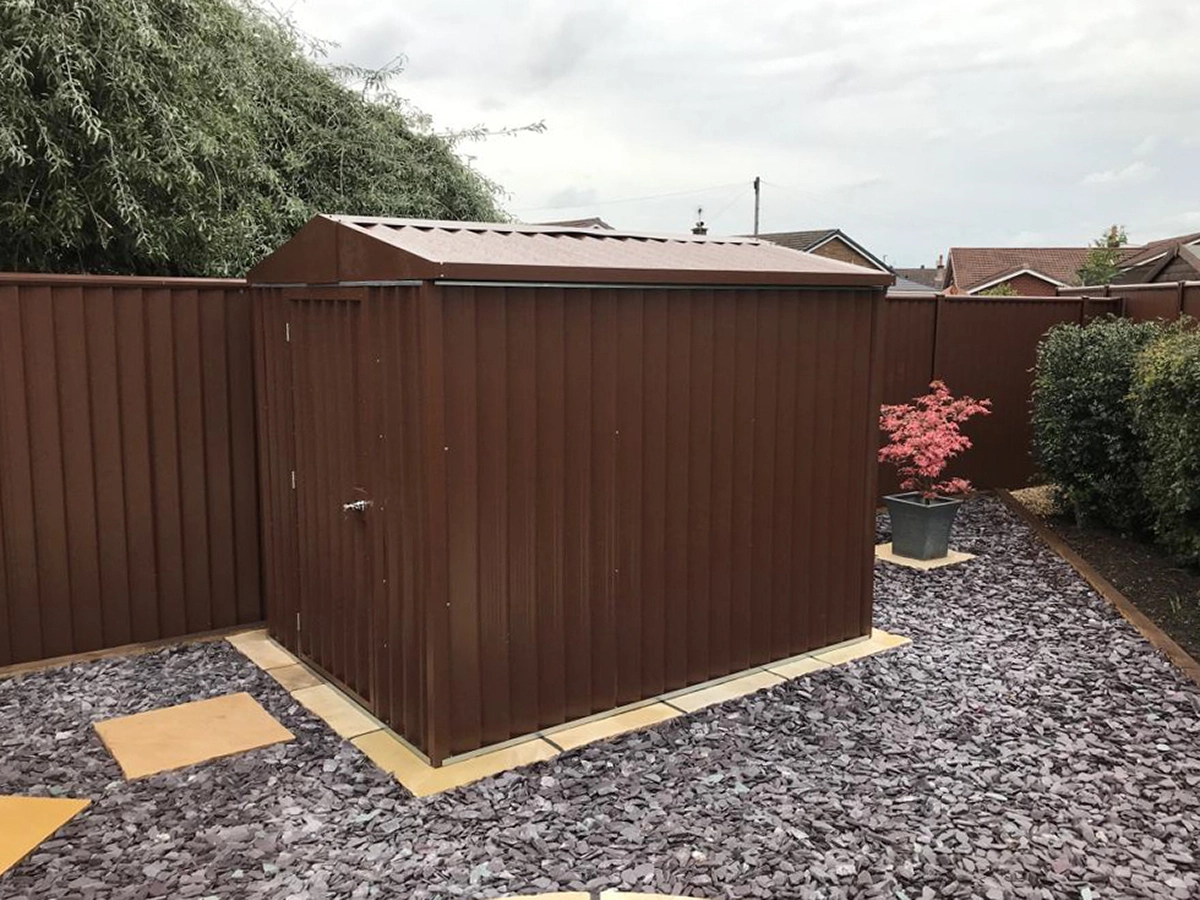
Measuring garden space for a shed makes it easier for you to find the balance between storage capacity and the space needed for other garden activities. ColourFence offers ColourShed, which is basically a steel garden storage shed that compliments their fences. Their standard size 8ft x 6ft shed is a recommended choice.
Step 3: Leave Enough Space Around the Shed
Leave some extra space for installing and maintaining the shed as well as for using it. Make sure that doors will not open onto the pathway, do not interfere with passages and will not collide with surrounding walls or fences.
It is necessary to take into consideration some other details of the garden as well, including the bushes and trees. You should follow the manufacturer’s instructions to find out how much space you should leave around the shed for installation and maintenance. If you have decided to purchase a colour shed, take into consideration its positioning requirements before finalising the location.
Step 4: Check the Ground and Garden Slope
Try to find a stable surface, which is preferable to be flat. Confirm any irregularities on the surface or areas where rainwater collects. Sometimes it may be necessary to prepare the appropriate surface for the shed before installation. Proper drainage is essential in the UK’s wet weather. Standing water can create moist conditions and ruin the soil around your shed. Therefore, choose a place without any water issues.
Step 5: Measure Access for Delivery and Installation
Check for measurements of your garden gates, paths, doors, and narrow pathways through which the shed will be delivered. The shed might fit the area designated for it, but it may be difficult to deliver it to the garden. Some models could be delivered as flat pack kits or as separate parts, while others have different methods of delivery. Measuring garden space for a shed involves checking with the supplier whether the shed’s parts can fit through your garden gate and pathways.
Other Things to Consider Before Buying a Garden Shed
Shed Height and Roof Design
Consider the height of the shed, especially the roof. You may face some issues with finding a place for it because of tree branches, or other obstacles. Pay attention to the roof design and the available vertical space.
Planning Permission and Boundaries
There are many issues regarding planning permission in the UK that rely upon factors such as the height of the shed, its location, its purposes etc. Check the relevant local council guidance and applicable permitted development rules before installation. Listed buildings and properties in designated areas may have additional restrictions.
Storage and Future Needs
Plan the kind of things you are going to keep in the shed – whether it is gardening equipment or bigger objects like bicycles and lawnmowers. Account for shelving, equipment dimensions and room to move comfortably. Choosing the right capacity now can prevent storage difficulties later.
Right measurements will ensure that the shed you purchase is adequate for your garden without leaving any extra space. Before buying, consider the available area, surface, delivery of access, external dimensions and other planning considerations. If you are wondering how to measure your garden, you may want to consider drawing up your plans and comparing different sizes of sheds. You could look at a colour shed in UK through ColourFence for your garden fencing.
ColourFence offers steel fencing, gates, railings, and garden storage units meant for low maintenance outdoor environments. Please visit our website for more information on our products.